Express Entry from Morocco, step by step
The full path from a first CRS estimate to a permanent resident visa in the passport, told from one real application made from Casablanca in 2025–2026. Each step has what to do, the documents to gather, and what actually happened.
- Real application, 2025–2026
- Federal Skilled Worker
- French-language draw
- Applied from Morocco, no consultant
Our real timeline
- Invitation → application submitted
- 45 days
- Application submitted → passport request
- 178 days
- Invitation → passport request
- 223 days
Read this first. This is one person's experience, written up to help others. It is not legal advice and it is not affiliated with IRCC. Personal details on every document are blacked out. Rules and amounts were checked against IRCC's pages on 30 September 2026, but they change. Always check the official page linked in each step.
- Phase 1Step 1–3Get readyLanguage test, diploma assessment, first score.
- Phase 2Step 4–5Enter the poolProfile, then wait for an invitation.
- Phase 3Step 6–9Apply (60 days)Medical, documents, submission.
- Phase 4Step 10–12ProcessingBiometrics, requests, passport.
- Phase 5Step 13–14Land in CanadaFirst entry, then settling in.
On this page
Step 1 · Get ready
Check that you qualify and estimate your score
Most applicants from Morocco go through the Federal Skilled Worker program. Before spending money on tests, check the minimum rules and estimate your CRS score.
How long it took: One evening
What to do
Read the Federal Skilled Worker requirements. In short: at least 1 year of continuous, paid, full-time skilled work (1,560 hours) in the last 10 years, level 7 in all four abilities of your first official language, a completed education, enough settlement funds, and 67 points on the FSW grid.
Estimate your CRS score with our calculator. Enter the language results you expect, not the ones you have today, to see what they are worth.
Look at the French-language proficiency category. You need NCLC 7 in all four French abilities. Its draws have often had much lower cut-offs than general draws. Compare on the draws page.
If you also have an English test, keep it: French NCLC 7 plus English CLB 5 in all four abilities gives 50 extra points, instead of 25 with French alone.
Official sources: Federal Skilled Worker Program · Category-based selection
Step 2 · Get ready
Pass the French test (TCF Canada or TEF Canada)
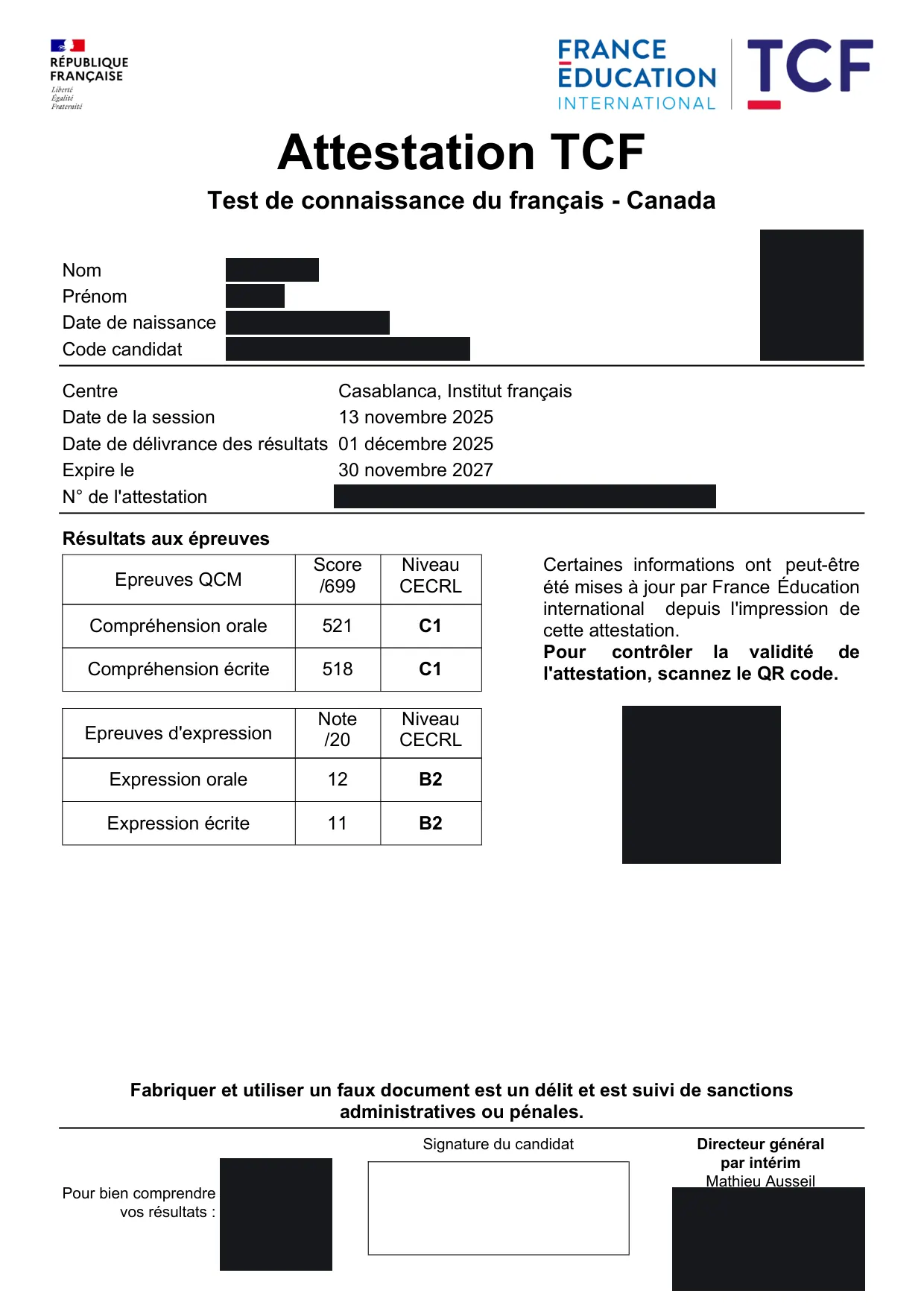
For the French category you need NCLC 7 in each of the four abilities, not just on average. Results are valid 2 years, so time the test so it's still valid when you submit.
How long it took: Two attempts, about 3 weeks for results
What to do
Pick TCF Canada or TEF Canada. IRCC accepts both. Check the exact scores for NCLC 7 on our TCF Canada → NCLC and TEF Canada → NCLC pages. For TCF Canada, NCLC 7 means at least 458 in listening, 453 in reading, and 10/20 in speaking and writing.
Book early. The Instituts français in Morocco run TCF Canada sessions, and seats go fast.
Practise with timed series. The multiple-choice parts (listening and reading) reward practice with series in the real exam format.
Practise speaking out loud with someone, under exam conditions. The examiner moves on if you freeze.
In writing, watch the clock: task 3 is the one people run out of time on.
 Open full size
 Official sources: Language test results
Step 3 · Get ready
Get your diploma assessed (ECA with WES)
A foreign diploma earns points only once a designated organization has assessed it. From Morocco, WES is the usual choice. The report must be less than 5 years old when you create your profile and when you apply.
How long it took: About 7 weeks
What to do
Open a WES account and choose the ECA for IRCC.
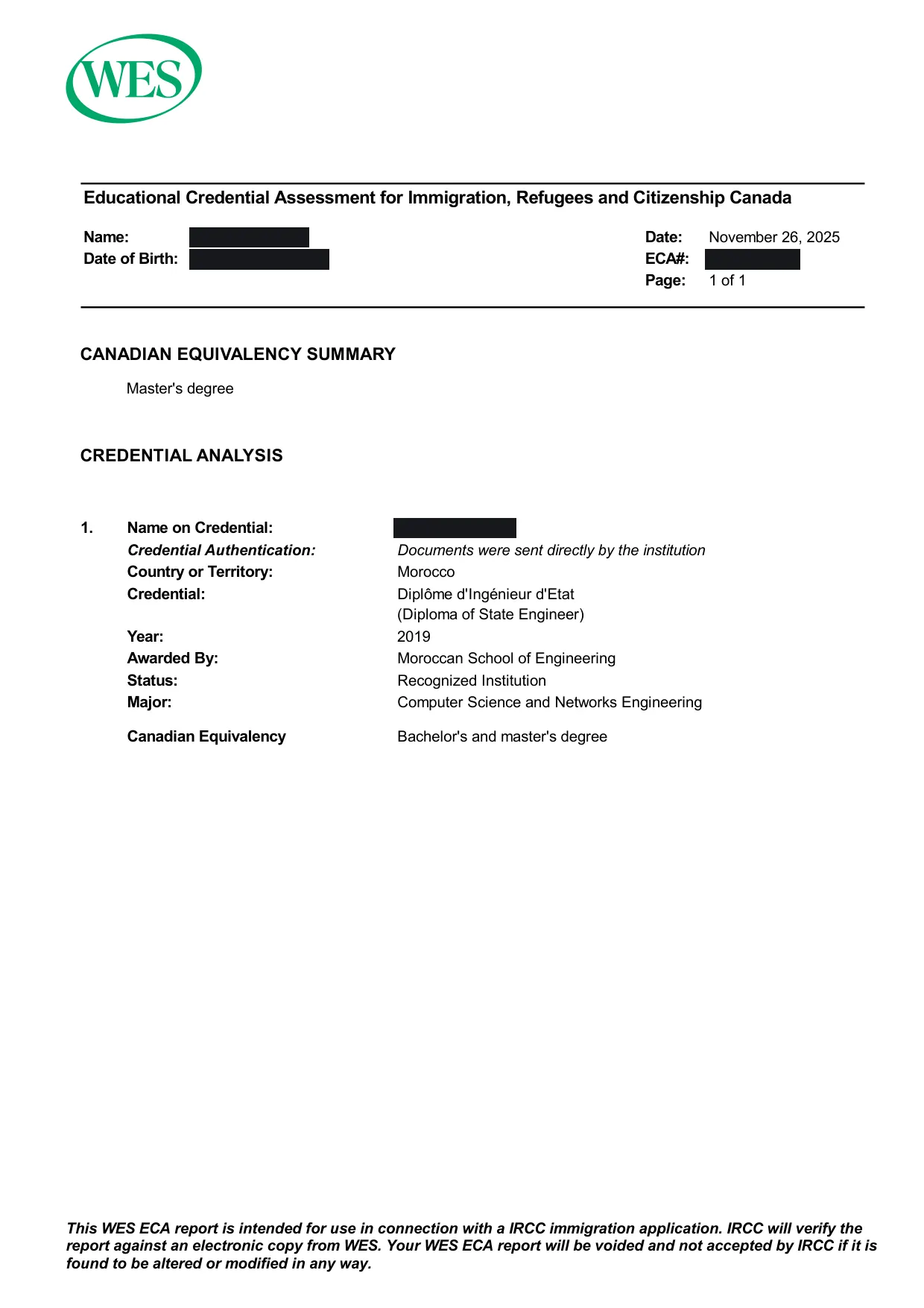
Assess your highest diploma. That's the one that earns points. In our case this was the engineering degree, sent with its transcripts.
Ask your school to send the documents the way WES requires (WES tells you the rules per country and school). Our report says “Documents were sent directly by the institution”.
When the report is ready, download the PDF from your WES account. You'll type its reference number into your Express Entry profile.
 Open full size
 Official sources: Educational credential assessment
Step 4 · Enter the pool
Create your Express Entry profile
The profile is an online form in your IRCC account. It gives you a CRS score and puts you in the pool. Every answer must match the documents you'll upload later, so take your time.
How long it took: One long evening with a friend who had done it
What to do
Create your IRCC secure account and start the Express Entry profile.
Choose your NOC code for each job. Read the lead statement and main duties on the NOC site and pick the code that matches what you actually did. Your employer letters will have to list these duties. In IT, for example, 21231 is software engineers and designers and 21232 is software developers and programmers.
Enter every job with exact start and end dates. Use your CNSS record as the reference. IRCC can compare the dates.
Fill in the 10-year personal history (studies, jobs, unemployment, travel) with no gaps.
Enter the test results and the WES reference exactly as printed. Submit, and note your CRS score and profile number.
Keep the profile up to date. If you change job while in the pool, edit it: the score is recalculated.
Official sources: Submit an Express Entry profile · National Occupational Classification (NOC) · CICC register of licensed consultants
Step 5 · Enter the pool
Wait in the pool for an invitation (ITA)
IRCC holds rounds of invitations, often every week or two, without announcing them. Each round has a type (general, French, category) and a cut-off score. If your score is at or above the cut-off of a round you're eligible for, you get an invitation to apply (ITA).
How long it took: About 3 weeks after the second profile
What to do
Watch the recent draws, especially the French-language rounds if you have NCLC 7.
Check your IRCC account after each round. The ITA arrives as a message in the account, and you get an email saying you have a new message.
While you wait, start gathering the documents in step 8. The 60 days after an ITA go fast.
Official sources: Category-based selection
Step 6 · Apply (60 days)
After the ITA: a 60-day plan
You have 60 days to submit a complete application for permanent residence (e-APR). What slows people down is money and employer letters, not the online form.
What to do
Week 1: sort out the proof of funds (see step 8) and book the medical exam (step 7).
Weeks 1–3: ask each employer for a reference letter with your duties, download the CNSS attestation, request the police certificate and the birth certificate, get photos.
Weeks 3–6: write any letter of explanation, scan everything into clean PDFs (one per document, clear file names).
Weeks 6–8: fill in the e-APR, upload, pay, submit. Don't wait for day 60: the portal can be slow.
Sort your folders the way a friend advised us: Education, Work, Proof of funds, plus Identity. It makes the upload much easier.
Official sources: Apply for permanent residence · Express Entry documents
Step 7 · Apply (60 days)
Do the upfront medical exam
Express Entry applicants take the medical exam after the ITA and before submitting. Only an IRCC panel physician can do it. The results are valid 12 months, and your PR visa will expire on that date too.
How long it took: One morning, plus the lab and X-ray visits
What to do
Find a panel physician in your city on the official list. Your own doctor can't do it.
Call for an appointment. Bring your passport. The clinic takes your photo and sends you to a partner lab and X-ray centre.
Bring cash. Not every clinic takes cards.
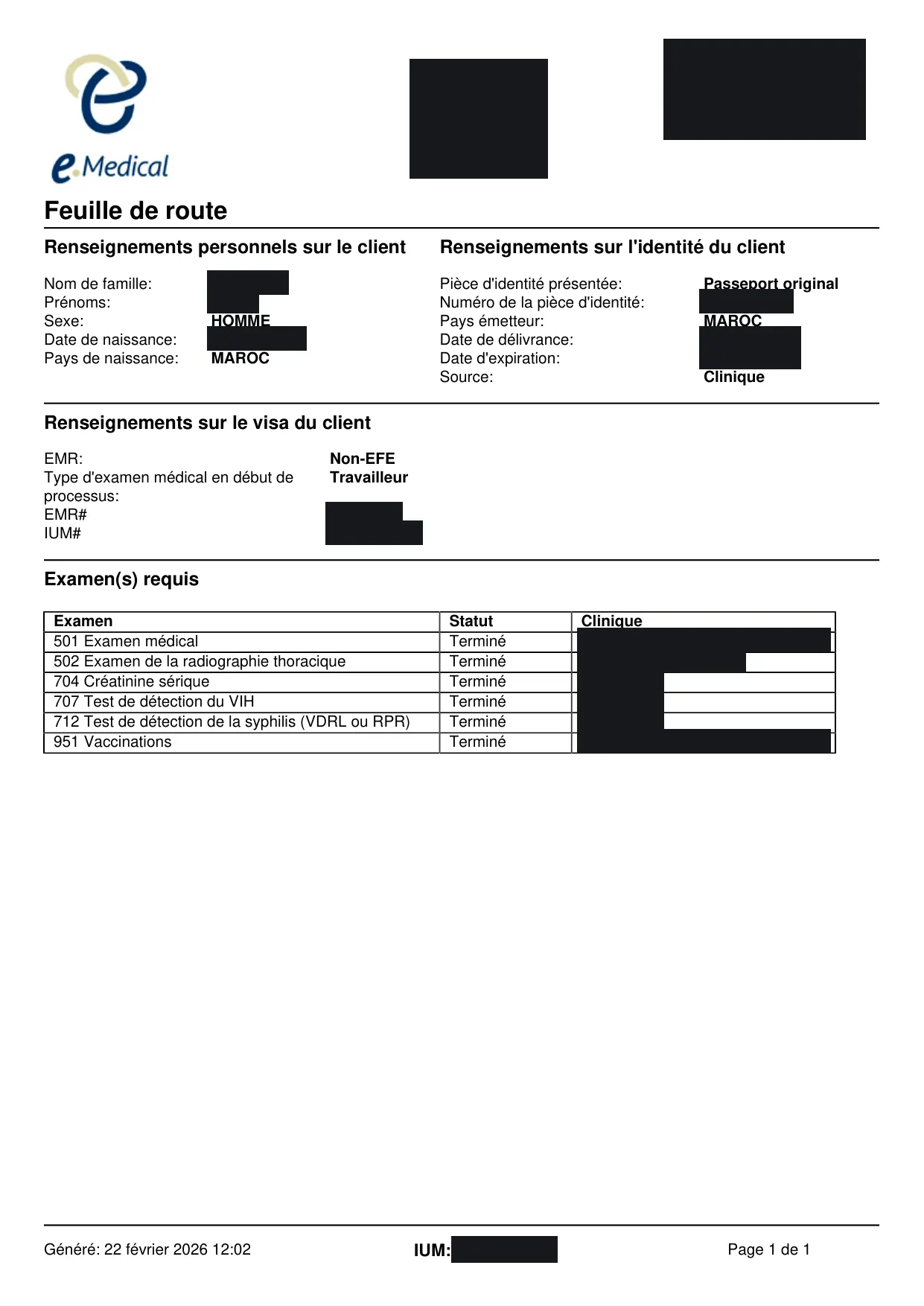
The exam included a physical exam, a chest X-ray, blood tests (creatinine, HIV, syphilis) and a vaccination check.
Upload the confirmation sheet (the “feuille de route” / IME information sheet) with your application.
 Open full size
 Official sources: Medical exam for permanent residents · Find a panel physician
Step 8 · Apply (60 days)
Gather the documents
Tick things off as you go. Your ticks are saved in this browser. The work documents and the proof of funds are where most of the effort goes.
What to do
Dates must match everywhere: profile, employer letters, CNSS attestation. Download your CNSS salary declaration from Ma CNSS first and use it to check every date.
If something doesn't match or you forgot a job, correct it in the application and add a letter of explanation (template below). An honest correction is far safer than a hidden mismatch.
Documents in French or English need no translation. Arabic-only documents need a certified translation.
Education and language
0 of 5 ready
Work, for each job in your profile
0 of 6 ready
Proof of funds
0 of 7 ready
Identity and civil status
0 of 7 ready
Your ticks stay in this browser only.
 Open full size
 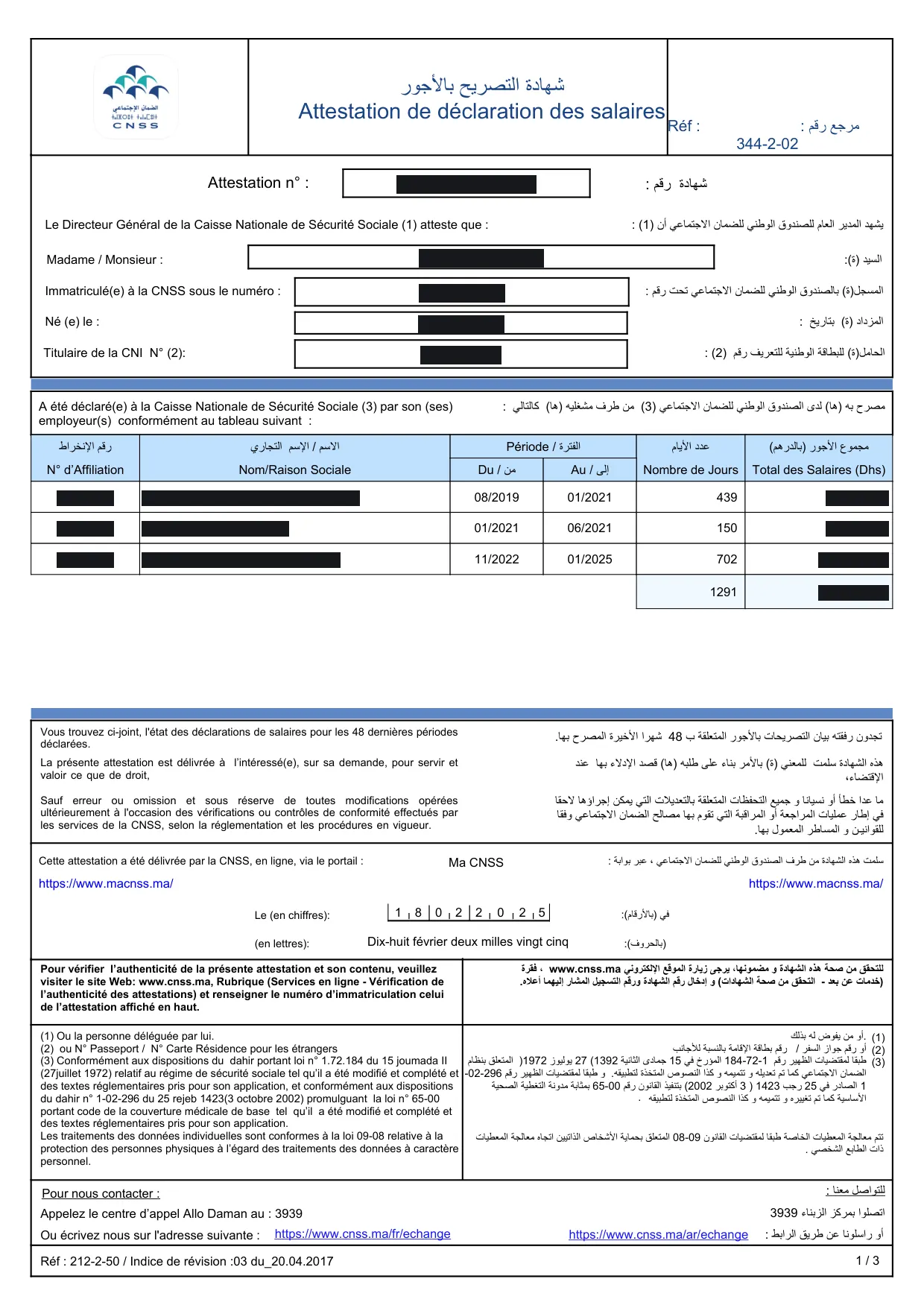 Open full size
 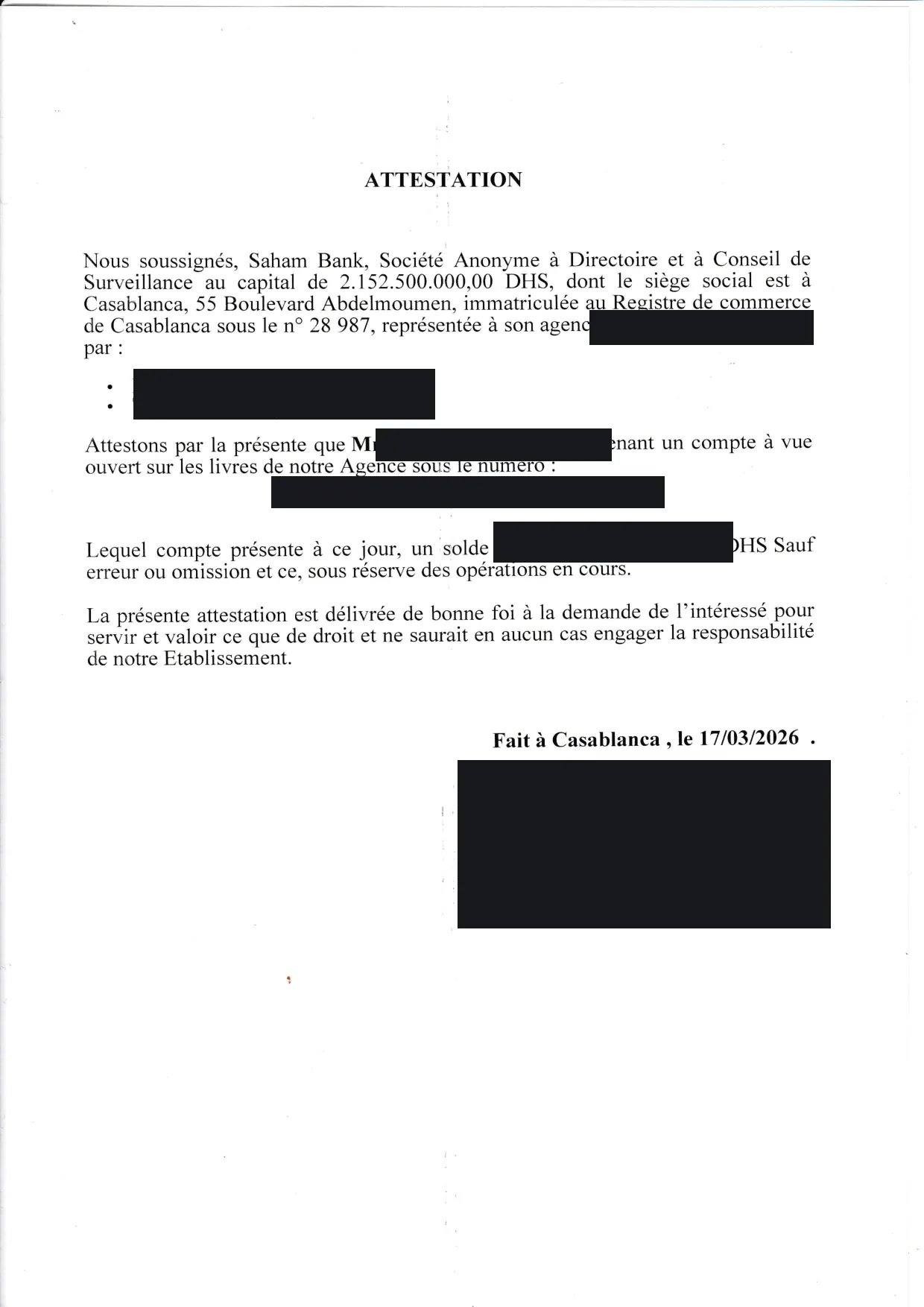 Open full size
 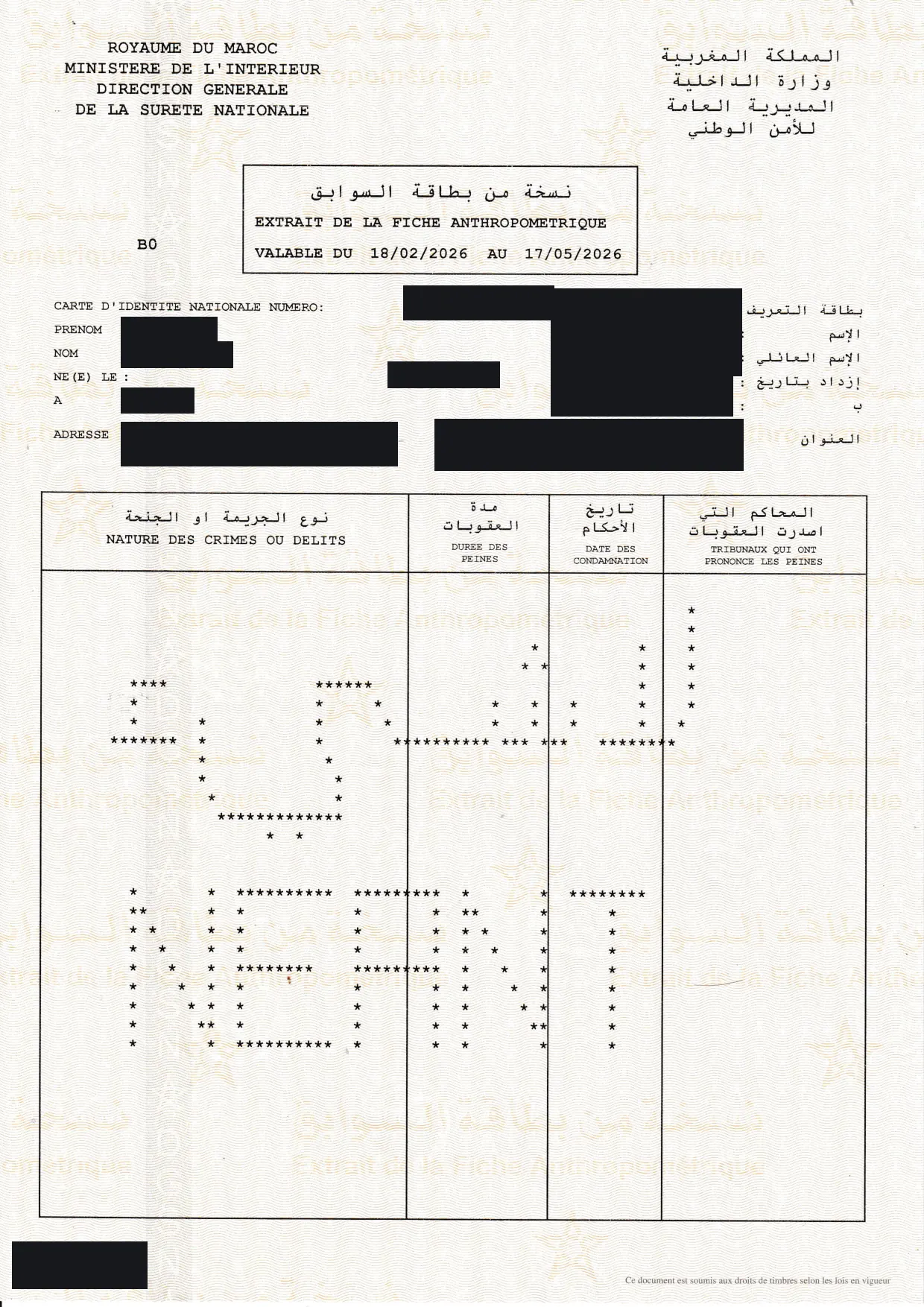 Open full size
 Templates we used
Written in French, like the Moroccan documents they go with. Replace everything in [brackets].
Gift deed (attestation de don)For money given by a parent. Both sign, and you have the signatures legalized at the moqata'a.
ATTESTATION DE DON

Je soussigné(e) M./Mme [Nom et prénom du donateur], titulaire de la CIN n° [CIN du donateur], déclare avoir fait un don de [montant en chiffres] DH ([montant en lettres] dirhams) de mon compte n° [RIB du donateur] à mon fils / ma fille, M./Mme [Nom et prénom du bénéficiaire], titulaire de la CIN n° [CIN du bénéficiaire], dont le RIB est [RIB du bénéficiaire], le [date du virement], pour subvenir à ses besoins dans le cadre de sa demande de résidence permanente au Canada (Entrée express).

Ce montant constitue un don irrévocable, non remboursable, sans aucune obligation de remboursement présente ou future.

Je soussigné(e) M./Mme [Nom et prénom du bénéficiaire], confirme avoir reçu ce don et atteste qu'il ne s'agit pas d'un prêt et qu'aucun remboursement n'est prévu.

Fait à [ville], le [date]

Signature du donateur          Signature du bénéficiaire
(signatures légalisées)
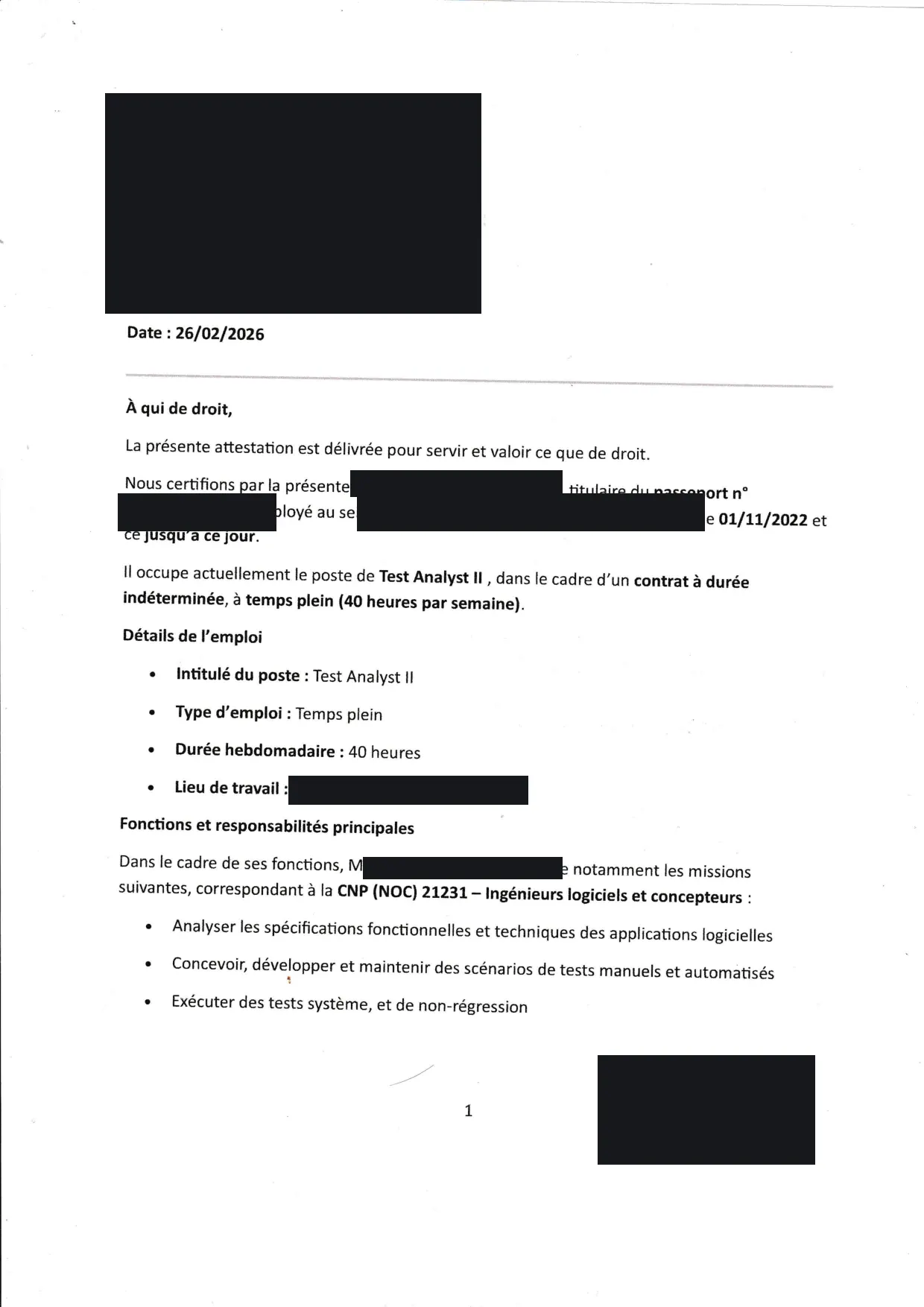
Employer reference letterGive it to your employer or manager to put on letterhead, adjust, sign and stamp. Take the duties from your NOC's main duties, reworded for what you really did.
[En-tête de l'entreprise : raison sociale, adresse, téléphone, e-mail, site web]

Date : [date]

À qui de droit,

La présente attestation est délivrée pour servir et valoir ce que de droit.

Nous certifions par la présente que M./Mme [Nom et prénom], titulaire du passeport n° [numéro], est employé(e) au sein de [entreprise] depuis le [date d'entrée] [et jusqu'au [date de sortie] | et ce jusqu'à ce jour].

Il/Elle occupe le poste de [intitulé du poste], dans le cadre d'un contrat à durée [indéterminée/déterminée], à temps plein ([nombre] heures par semaine), avec un salaire annuel brut de [montant] DH.

Détails de l'emploi
• Intitulé du poste : [intitulé]
• Type d'emploi : Temps plein
• Durée hebdomadaire : [nombre] heures
• Lieu de travail : [ville], Maroc

Fonctions et responsabilités principales
Dans le cadre de ses fonctions, M./Mme [Nom] assure notamment les missions suivantes, correspondant à la CNP (NOC) [code] – [titre de la CNP] :
• [tâche 1, reprise de la description principale de la CNP]
• [tâche 2]
• [tâche 3]
• [tâche 4]
• [tâche 5]

Pour toute information complémentaire, nous restons à votre entière disposition.

Nom du responsable : [nom]
Fonction : [fonction]
Téléphone : [téléphone]
E-mail : [e-mail professionnel]

Signature et cachet de l'entreprise
Letter of explanationFor a correction, a gap, a forgotten job or the origin of funds. Keep it short and factual.
Lettre explicative

Objet : [Correction de mon historique d'emploi | Origine de mes fonds | …]
Demande : [numéro de demande]   UCI : [numéro UCI]

Madame, Monsieur,

Je souhaite, par la présente, apporter une précision concernant [l'élément concerné] dans ma demande.

[Expliquer en deux ou trois phrases ce qui s'est passé. Exemple : « Lors de la saisie initiale de mon profil, j'ai omis par erreur mon emploi au sein de la société [nom], du [date] au [date]. Cette période apparaissait donc comme un vide dans mon parcours. »]

[Dire ce que vous avez fait. Exemple : « J'ai ajouté cet emploi à mon historique afin que mes informations soient complètes et exactes. Les pièces jointes ([liste]) le confirment. »]

Je confirme que cette omission n'était pas intentionnelle. Je reste à votre disposition pour toute information complémentaire.

Veuillez agréer, Madame, Monsieur, l'expression de mes salutations distinguées.

[Nom et prénom]
[Date et signature]
Official sources: Proof of funds · Police certificate: Morocco · Ma CNSS (salary declaration certificate)
Step 9 · Apply (60 days)
Fill in and submit the application (e-APR)
The application is a set of online forms in the same IRCC account, then the uploads, then the fees. Once submitted you can't edit it, so review everything against your documents.
How long it took: 45 days from ITA to submission
What to do
Go through each form. The answers must match your profile and your documents, and the 10-year history can't have gaps.
Upload one clean PDF per required document. Where a slot asks for several papers, merge them into one PDF in a logical order.
Pay the fees: CAD 990 processing fee and CAD 600 right of permanent residence fee per adult, plus CAD 85 for biometrics. You can pay the right of permanent residence fee later, but paying it now avoids a delay.
Submit. You get a confirmation straight away and an acknowledgement of receipt (AOR) in your account.
Official sources: Apply for permanent residence · IRCC fee list
Step 10 · Processing
Give your biometrics at VFS Rabat
After submitting you get a Biometric Instruction Letter (BIL). In Morocco, biometrics (fingerprints and photo) are taken at the Canada visa application centre run by VFS Global in Rabat.
How long it took: BIL about 6 weeks after submission; appointment 2 days later
What to do
When the BIL arrives in your account, print it.
Book an appointment on the VFS Global Canada site for Morocco.
Bring the printed BIL and your passport.
From Casablanca, the train is easiest: Casa-Port → Rabat-Ville. The centre is a short walk from Rabat-Ville station. Take an early train so you're not late.
The biometrics show as completed in your account a few days later. Processing continues from there.
Official sources: VFS Global, Rabat centre
Step 11 · Processing
Follow the processing and answer requests
Then you wait. The tracker shows each check (eligibility, medical, criminality, security). IRCC may ask for more documents with a deadline, and in our case that meant military service records.
How long it took: About 4 months after biometrics
What to do
Create an account on the IRCC application tracker with your UCI and application number. It shows much more detail than the main account. It can refuse new accounts for a while at first. Keep trying.
Check IRCC's processing times to know what to expect.
If you get a request for documents, answer quickly and completely, through your account (never by email).
Report any change (address, job, marital status) through the IRCC web form.
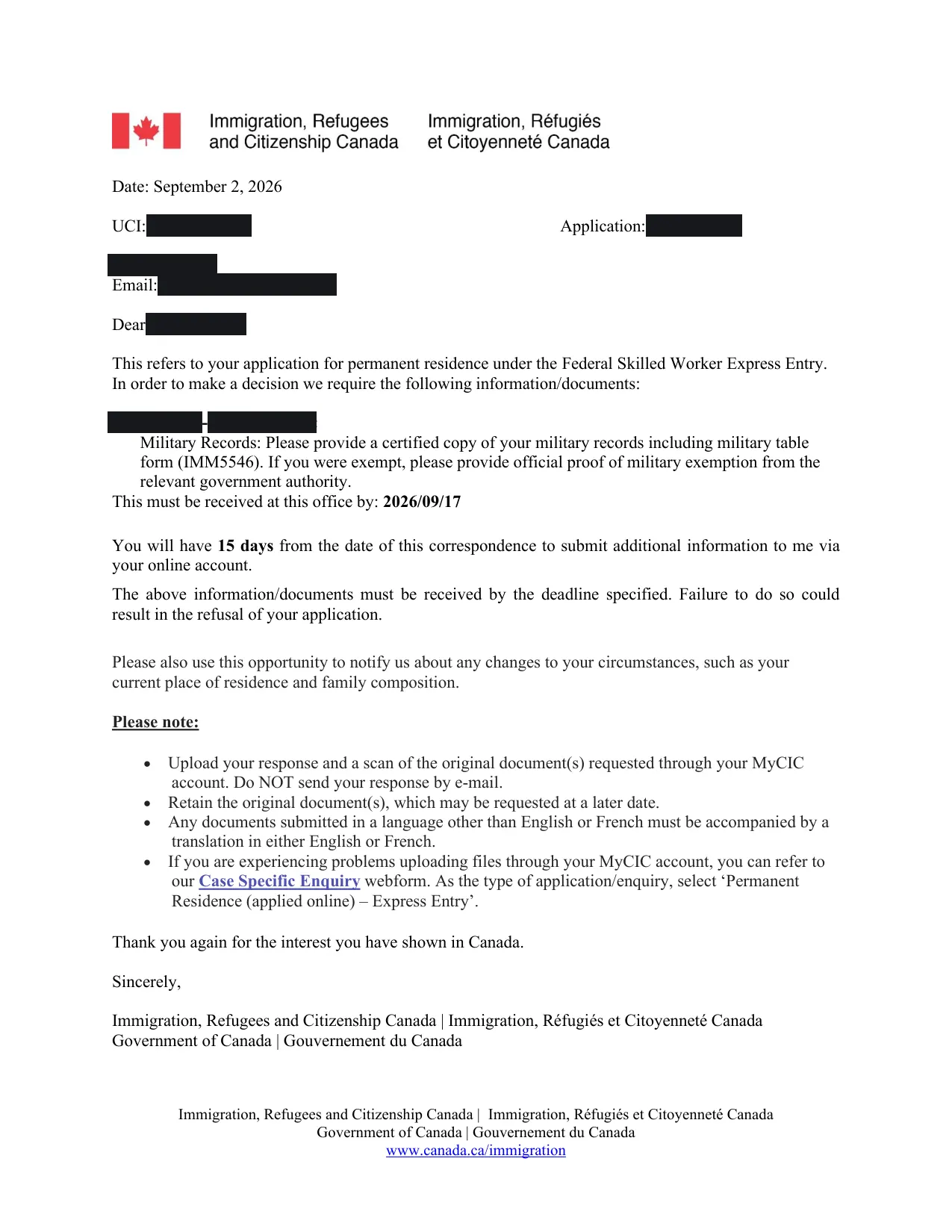 Open full size
 Official sources: IRCC application tracker · Processing times · IMM 5546: Details of military service · IRCC web form
Step 12 · Processing
Send your passport (PPR) and get the visa
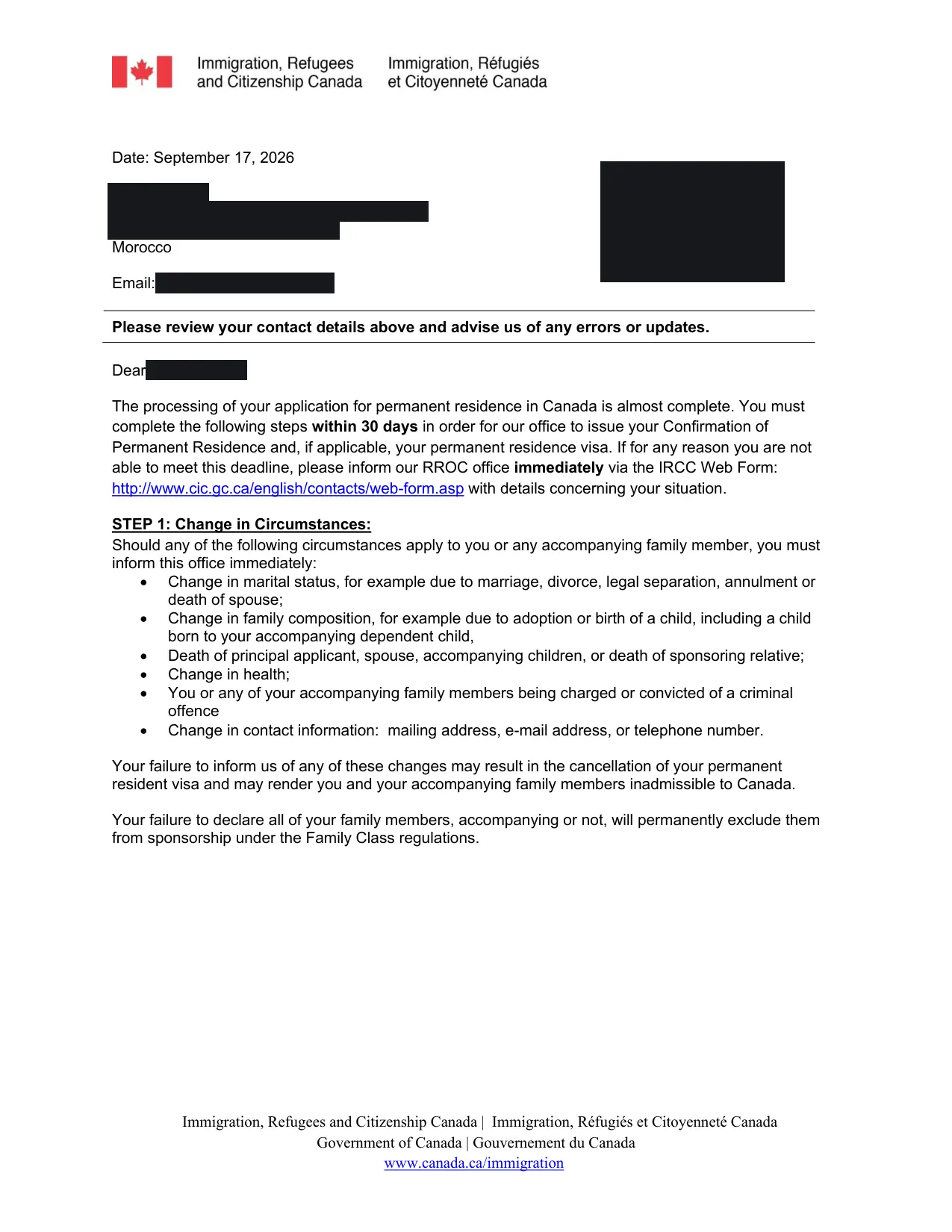
The passport request (PPR) means the file is almost done. You have 30 days to hand in your passport so IRCC can put the permanent resident visa in it and issue your COPR (Confirmation of Permanent Residence).
How long it took: About 11 days from PPR to visa
What to do
Print the PPR letter.
Get 2 photos to IRCC's permanent resident specs: 50 × 70 mm, face 31–36 mm from chin to crown, white background, taken within 6 months. The back of one photo must show your name, date of birth, the studio's name and address, and the date. A photographer near Rabat-Ville station does these every day.
Note your height and eye colour. The letter asks for them.
Hand in the letter, passport and photos at VFS Rabat and pay the passport transmission fee. You can ask for the passport to come back to the Casablanca centre.
When the account shows a new document (“document valid”), the visa has been printed. VFS then tells you when to collect the passport.
Check the visa and COPR details (name, date of birth) straight away. Report any error through the web form.
 Open full size
 Official sources: If your application is approved (outside Canada)
Step 13 · Land in Canada
Land in Canada and become a permanent resident
You become a permanent resident the day a border officer confirms your COPR at your first entry, before the expiry date on the COPR. Many Moroccan applicants do a short “landing” trip first and move later.
What to do
Keep these with you, not in your checked bag: passport with the visa, COPR, and proof of funds (unless you're exempt).
If you carry CAD 10,000 or more, declare it at the border.
The officer confirms your Canadian mailing address for the PR card, which comes by post. If you don't have one yet, use the address of someone you trust.
Once you've landed: get your SIN (Social Insurance Number) at Service Canada, open a bank account, and look at provincial health insurance. These can all be done in a few days.
To keep PR status you must be in Canada at least 730 days in every 5 years (they don't have to be in a row). For citizenship you need 1,095 days in the last 5 years.
Official sources: If your application is approved (outside Canada) · Understand PR status (residency obligation) · Citizenship: who can apply
Step 14 · Land in Canada
If your life changes while you wait (marriage)
IRCC must know about any change in marital status or family before you land. Hiding it is misrepresentation, and a family member you don't declare can never be sponsored later.
What to do
Tell IRCC about any change (marriage, birth, address) through the web form and wait for their instructions.
Getting married before landing: once you declare it, IRCC may add the spouse to the file. That means more checks for them and funds for two people, so a delay.
Getting married after landing: your status is confirmed first. You can then sponsor your spouse as a permanent resident.
For your own situation, ask a licensed representative or IRCC directly. This guide can't cover every case.
Official sources: IRCC web form
Our real timeline
Every date below comes from the documents and messages of the application this guide is based on.
- TCF Canada exam (second attempt)35 days later
- WES report received13 days later
- Date to comeExpress Entry profile submitted
- Invitation to apply (ITA)72 days later
- Medical exam14 days later
- Application submitted31 days later
- Biometrics letter received44 days later
- Biometrics at VFS Rabat2 days later
- Request for military records117 days later
- Military records uploaded2 days later
- Passport request (PPR)13 days later
- Passport handed in at VFS Rabat5 days later
- Passport back with the PR visa6 days later
- Date to comeLanding in Canada
Dates marked “to come” will be added.
What it costs
IRCC fees are paid online in Canadian dollars. The amounts below are from IRCC's fee list and proof-of-funds page.
What it cost us, all in
≈ 25,000–26,000 DH
One adult, from the first language test to the visa in the passport.
IRCC fees (per person)
- Processing fee, principal applicant
- CAD 990
- Right of permanent residence fee
- CAD 600
- Spouse or partner (processing + right of PR)
- CAD 990 + 600
- Dependent child
- CAD 270
- Biometrics (family maximum CAD 170)
- CAD 85
Minimum settlement funds
Unless you have a valid job offer and permission to work in Canada, or you're invited under the Canadian Experience Class.
| Family members | Funds (CAD) |
|---|---|
| 1 | 15,263 |
| 2 | 19,001 |
| 3 | 23,360 |
| 4 | 28,362 |
| 5 | 32,168 |
| 6 | 36,280 |
| 7 | 40,392 |
| Each additional member | +4,112 |
Other costs, paid in Morocco
- TCF Canada or TEF Canada exam (each attempt)
- WES assessment and the school's fees for sending documents
- Medical exam, X-ray and lab tests (bring cash)
- Fiche anthropométrique stamps, legalizations at the moqata'a
- VFS passport transmission fee, photos, train Casablanca–Rabat
- Flight for the landing trip
Fees checked on IRCC's fee list (modified 2026-09-21) and proof-of-funds page (amounts updated 2025-07-07), on 30 September 2026.
Mistakes to avoid
- Job dates that don't match your CNSS record.
- Leaving out a job or a period of your life. Every gap needs an answer.
- Borrowed money, or a big deposit you can't explain.
- Letting a test, the ECA or the medical expire before the step that needs it.
- Paying an unlicensed agent, or giving anyone your account password.
- Not declaring a marriage or a birth before you land.
- Photos that don't meet the exact PR specs (they send the package back).
Questions we were asked
How much did it cost in total?
About 25,000 to 26,000 DH for one adult, from the first language test to the visa: two TCF attempts and an IELTS, WES with DHL, the medical exam, IRCC's fees (CAD 1,675, almost half of the total) and small costs at VFS. The proof of funds isn't counted, because you keep that money. The breakdown is in “What it costs”.
How long did it take from invitation to visa?
The invitation came on 6 February 2026, the application was submitted on 23 March 2026 and the passport request came on 17 September 2026, about 7 months after the invitation. The passport came back with the visa about 11 days after the passport request.
Do work documents have to be legalized?
In our case, no. The company's stamp and a signature with the manager's name and phone number were enough. The gift deed was the only document whose signatures were legalized, at the moqata'a.
Can my parents give me the money for the proof of funds?
Yes, as a gift, not a loan. Transfer it to your account and document it: a gift deed signed by both of you with legalized signatures, the donor's national ID, a birth certificate proving the link, and the statements showing the transfer. The money must be yours and available.
Where do you give biometrics in Morocco?
At the Canada visa application centre run by VFS Global in Rabat, near Rabat-Ville train station. Bring the biometric instruction letter and your passport.
Is the military service certificate always requested?
No. Some Moroccan applicants are asked for it and others aren't. If asked, you fill in form IMM 5546 and get a certificate from the État-major in Rabat stating whether you did military service.
Do I need a consultant?
No. The whole application in this guide was done without one, with the help of a friend who had just been through it. If you do pay someone, check they are licensed with the CICC (or a lawyer), and never give them your account password.
Official sources
- Federal Skilled Worker Program
- Category-based selection
- Language test results
- Educational credential assessment
- Submit an Express Entry profile
- National Occupational Classification (NOC)
- CICC register of licensed consultants
- Apply for permanent residence
- Express Entry documents
- Proof of funds
- Police certificate: Morocco
- Medical exam for permanent residents
- Find a panel physician
- IRCC fee list
- VFS Global, Rabat centre
- IRCC application tracker
- Processing times
- IMM 5546: Details of military service
- IRCC web form
- If your application is approved (outside Canada)
- Understand PR status (residency obligation)
- Citizenship: who can apply
- Ma CNSS (salary declaration certificate)
Checked on 30 September 2026. IRCC changes its pages and fees; the official page always wins.